

Hydroponics: Choosing the Right Equipment
Size your space first, then keep gear simple. This guide shows which 2×2–4×4 setup and starter style fits your goals, plus easy watering, media, and meters.
First time setting up a hydroponic space? The fastest way to avoid headaches is to choose the right footprint first, then match simple, reliable gear to that footprint: an even LED, gravity-friendly watering, a forgiving medium, and basic pH/EC checks.
Step 1 Pick your footprint
Always choose the space first. The light size follows the footprint, not the other way around.

| Footprint | LED power (typical) | What it comfortably grows | Best for |
|---|---|---|---|
| 2×2 (small) | 100–150 W | Salad greens, basil, cilantro, mint. 3–4 small pots or a tray. | First-time growers, kitchen supply, “learn the basics fast.” |
| 2×4 (medium) | 180–320 W | Greens + herbs, or 2 compact peppers/tomatoes. 4–6 pots. | Most home growers who want easy success and options. |
| 3×3 (productive) | 250–450 W | Heavier feeders, small tomatoes/peppers with room to train. | Hobbyists who want bigger harvests with a little training. |
| 4×4 (larger) | 450–650 W | Multiple fruiting plants or a dense herb garden. | Enthusiasts who value canopy management and yield. |
Tip: start the light 18–24″ above the canopy and raise the intensity gradually. Plants prefer a smooth ramp, not a sudden blast.
Step 2 Choose your starter style
All three kit styles below share the same core ideas: even light, watering that can’t forget, a forgiving medium, and simple meters. Pick the style that fits your time, budget, and comfort level.
Simple Sprout • 2×2
- LED: 100–150 W dimmable
- Watering: 1–2 on-demand valves + small reservoir
- Medium: coco/perlite 70/30 (very forgiving)
- Meters: pH pen (optional EC later)
Who benefits: first-timers, salad & herb lovers, “set it and forget it.”
Easy Grow • 2×4
- LED: 180–320 W dimmable
- Watering: 4 on-demand valves + inline filter
- Medium: rockwool starts into coco/perlite
- Meters: pH and EC pens
Who benefits: most home growers who want reliable results and flexibility to run greens or a couple of fruiting plants.
Productive Pro • 3×3–4×4
- LED: 320–650 W (use the dimmer!)
- Watering: multiple on-demand valves, quick-flush line, filter
- Medium: dialed coco/perlite or rockwool blocks
- Meters: pH + EC with weekly calibration
Who benefits: enthusiasts who want bigger harvests and don’t mind a little pruning and training.
Step 3 Set up watering that can’t forget
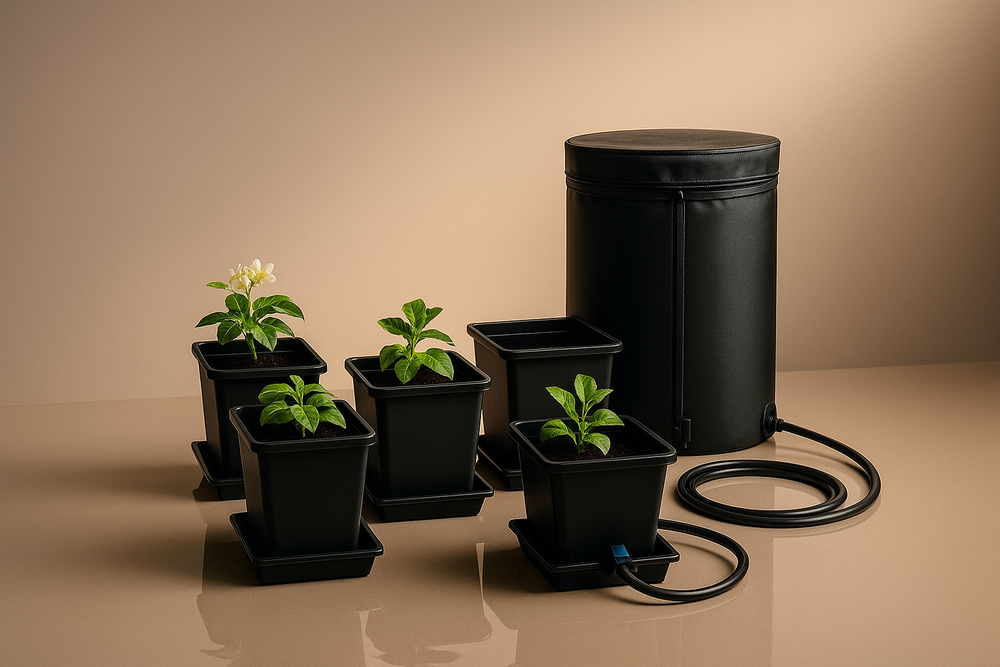
On-demand valves use gravity. When the medium dries, the valve opens; when it’s saturated, the valve closes again. No pumps, no timers, very quiet. Keep the reservoir slightly above the pots and add a small inline filter. Flush lines briefly when you change nutrients.
- Reservoir above pot height
- Inline filter on the feed
- Quick flush at nutrient changes
- Light-tight lines when possible
Step 4 Choose mediums that forgive mistakes
Pick one main medium and learn it. Both options below work beautifully with on-demand valves.


Step 5 Keep monitoring simple
A pH pen and an EC (conductivity) pen tell you two things: acidity and nutrient strength. Check, tweak, move on. That’s usually enough for a whole grow.

- pH target: 5.5–6.2
- Seedlings 0.6–1.0 EC • Veg 1.2–1.6 EC • Bloom 1.6–2.0 EC (crop dependent)
Step 6 Use the quick “which kit” picker
| Size | Suggested kit | Who benefits | Why |
|---|---|---|---|
| 2×2 | Simple Sprout (100–150 W LED, 1–2 valves, coco/perlite, pH pen) | Beginners, salad + herb growers | Fast setup, low power draw, very forgiving medium. |
| 2×4 | Easy Grow (180–320 W LED, 4 valves + filter, rockwool starts → coco, pH + EC) | Most home growers | Reliable coverage, can expand from greens to small fruiting crops. |
| 3×3–4×4 | Productive Pro (320–650 W LED, multiple valves, quick-flush, full meters) | Enthusiasts | Even canopy and more headroom for heavier-feeding plants. |
Not sure which kit matches your space?
Tell us your footprint, plant list, and how often you want to mix nutrients. We’ll spec the light, valve count, and medium so you can start without guesswork.